Birdwatching on Milnerton Lagoon: Quiet Woodbridge Island Viewpoints, Seasonal Species and What to Bring
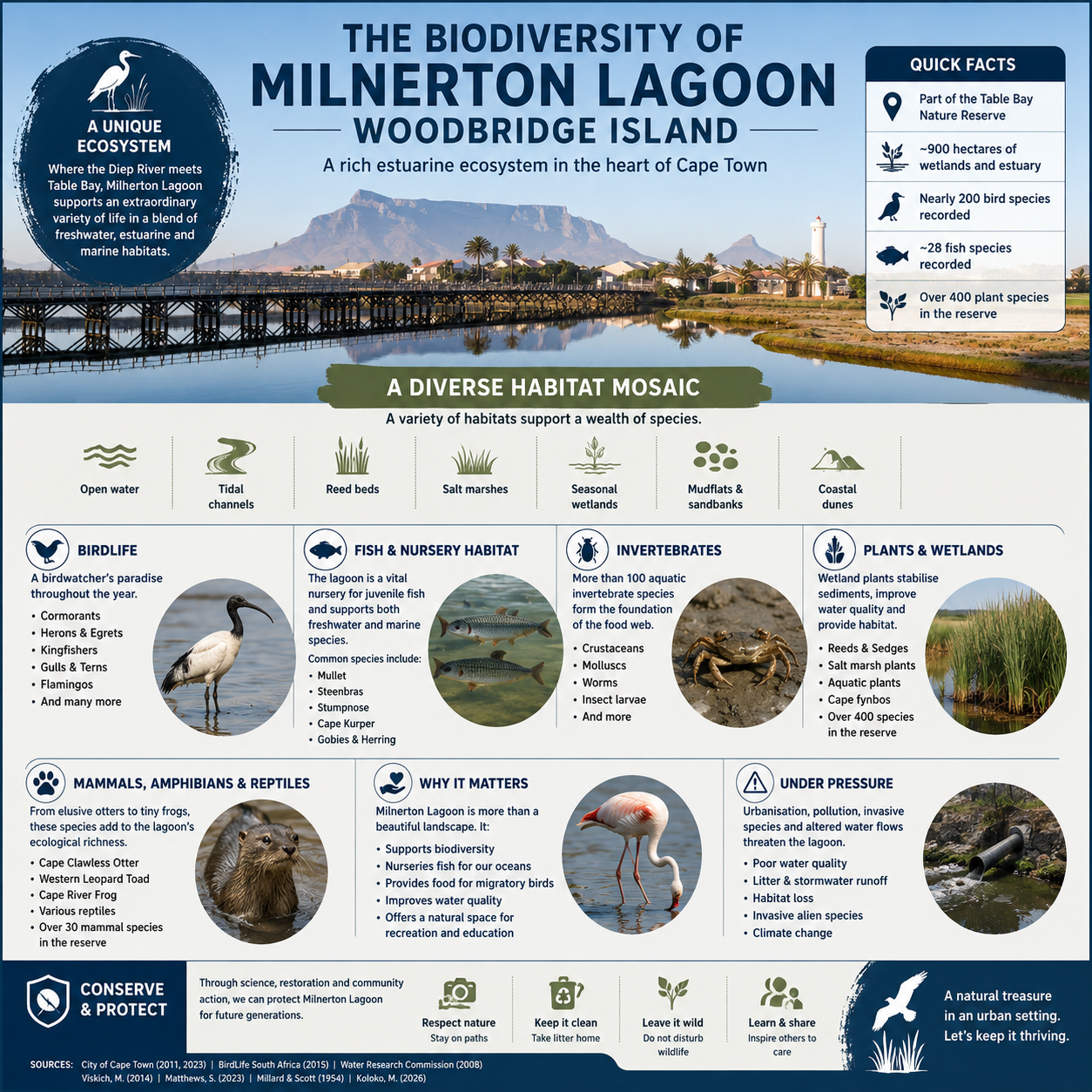
Wake early, cross the heritage wooden bridge and watch kingfishers, terns and waders at Milnerton Lagoon. Here’s where to stand, what you’ll spot and how to bird respectfully.
Why Milnerton Lagoon is a Birding Gem
Framed by Table Mountain and the Atlantic, the Milnerton Lagoon is a calm, nutrient‑rich estuary edged by reedbeds, mud, and low sandbars—exactly the mosaic coastal birds love. It’s easy to reach from central Cape Town in about 15 minutes, yet it feels protected and quietly residential around Woodbridge Island. The pedestrian‑only wooden bridge (a restored national heritage landmark) provides a stable, low vantage point right over the water, while paths on both banks let you work the light and the tide without bushwhacking.
Expect close views of herons and egrets probing the shallows, kingfishers hovering like clockwork toys, and seasonal waves of terns and Palearctic waders. On the seaward side, the beach often hosts African Black Oystercatchers, and cormorants commute along Table Bay in loose skeins. It’s a compact, forgiving place to learn coastal birding—and to take photographs with Table Mountain perfectly placed behind your subject.
Note: Enjoy the lagoon from the banks; water quality varies and swimming is not advised.
When to Go: A Seasonal Species Calendar
The lagoon produces year‑round, but species mix shifts with migration, breeding cycles and weather. Plan around both season and tide: for waders and terns, two hours either side of low tide is prime; for kingfishers, calm mornings are best; for atmospheric silhouettes, try sunset from the bridge or dunes.
• Summer (November–March)
- Highlights: Palearctic waders and terns peak. Look for Common and Greater Crested (Swift) Terns patrolling the mouth; Sandwich Terns and occasional Caspian Terns roosting on sandbars; White‑fronted Plovers scurrying the beach. On the mud and shallow edges, scan for Little Stint, Curlew Sandpiper, Common Ringed Plover and Whimbrel. Pied and Malachite Kingfishers are active and vocal along the reeds. Grey Heron, Little and Great Egret feed through most tides. Hartlaub’s and Kelp Gulls are constant; Grey‑headed Gulls are regular too.
- Tips: The prevailing south‑easter can be brisk. Early morning on the mainland (Milnerton) bank places the sun behind you with Table Mountain lit.
• Autumn (April–May)
- Highlights: Migrant waders thin gradually, but light is calm and clear. Tern numbers can still be good on passage. Reedbeds are busy with Southern Masked Weavers and warblers. Occasional Greater Flamingos may drift in from nearby wetlands when conditions suit. Kingfishers remain busy while fish fry are abundant in the channels.
- Tips: Work the upper lagoon edges on still mornings to pick out skulkers like Common Moorhen and juvenile Night Herons roosting deep in overhangs.
• Winter (June–August)
- Highlights: Duck and grebe diversity improves with Cape Teal, Yellow‑billed Duck, Red‑billed Teal, Cape Shoveler and Little Grebe. Red‑knobbed Coot congregate; Black‑winged Stilts probe shallows. Cormorant traffic (White‑breasted, Reed and Cape) is steady. Along the beach, African Black Oystercatcher numbers rise, often foraging at the wrack line. Raptors such as African Fish Eagle and African Harrier‑Hawk are occasionally seen over the water or reedbeds after cold fronts.
- Tips: Between fronts, crystal winter light rewards patient photography. Dress for wind and passing showers.
• Spring (September–October)
- Highlights: Migrants begin to return; weavers start frantic nest‑building, egrets show fresh plumes, and Malachite Kingfishers glow in new reeds. Barn Swallows, White‑throated Swallows and Little Swifts swirl overhead on insect hatches. Sandbars at the mouth host early arriving Common Terns, with lingering winter waterfowl still present.
- Tips: The first calm days after a late cold front can be electric, with birds feeding energetically.
Species you’re quite likely to encounter at any time include: Pied and Malachite Kingfisher; Little, Great and Cattle Egret; Grey Heron; Egyptian Goose; Yellow‑billed Duck; Red‑knobbed Coot; White‑breasted and Reed Cormorant; Hartlaub’s and Kelp…