Cape of Good Hope Overnight Trail: Permits, Huts and a Two-Day Coastal Route
Everything you need to plan Cape Town’s most coastal overnighter: how to book with SANParks, what the huts offer, distances and elevation, what to pack, and when to go.
Why this overnight ranks among Cape Town’s best
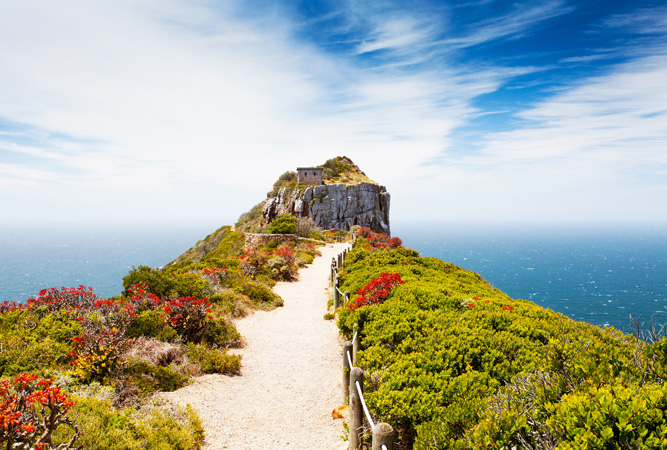
Few hikes stitch together ocean cliffs, wild beaches, milkwood thickets and fynbos-covered kopjes quite like the Cape of Good Hope Overnight Trail. This two-day, one-night circuit explores the Cape Point section of Table Mountain National Park, with nonstop Atlantic and False Bay vistas and regular wildlife sightings. It’s a managed SANParks trail with rustic hilltop huts, clear waymarking, and secure overnight parking at the entrance—perfect for adventurous travellers who want a big experience without carrying a tent.
Before you lace up, here’s a complete, practical guide covering bookings, distances and elevation, hut facilities, packing, and the season-by-season weather you’ll meet on the Cape of Storms.
- Trail format: 2 days, 1 night, circular route
- Total distance: about 33.8 km
- Typical time: Day 1 (5–7 hours), Day 2 (8–10 hours)
- Elevation: rolling terrain with several steady climbs; expect roughly 800–1,000 m cumulative gain across both days depending on detours
- Overnight: two simple huts on a hilltop inside the reserve
How SANParks bookings and permits work
The route lies inside the Cape of Good Hope (Cape Point) section of Table Mountain National Park and is administered by SANParks. You don’t just “show up and walk”—you must reserve a spot on the overnight trail and settle conservation fees.
What you book and pay
- Overnight trail reservation: secures bunks in the hilltop huts for one night on your chosen date.
- Daily conservation fees: payable per person for each day you enter the reserve (waived/reduced with a valid Wild Card). These are separate from your hut fee.
How to book
1. Check availability with SANParks for the Cape of Good Hope Overnight Trail (Table Mountain National Park). Weekends and school holidays fill quickly—plan well ahead.
2. Reserve and pay for your party. Confirm names and ID numbers for all hikers; age limits and group-size caps apply and solo hikers are generally not accepted.
3. Receive your booking confirmation/permit details. Save them offline.
4. On the day: arrive at the main entrance gate at opening time (08:00). Collect the hut key from the Access Control Officer, complete the Overnight Hiking Register, and park in the designated secure area for overnighters. You should be on the trail by 09:00 to comfortably reach the huts before dark.
5. On departure: sign the register again and return the hut key at the gate.
Good to know
- The overnight register is compulsory—you’ll sign in at the start and out at the end.
- The gate opens at 08:00; arrivals earlier than this are not permitted.
- You’ll be asked to depart the huts by around 09:00 on Day 2 to ensure you finish in daylight.
- If the forecast looks dangerous (severe wind or heavy fronts), call ahead—SANParks may advise postponement. Standard change/cancellation terms apply to your booking.
Distances, times and elevation at a glance
- Day 1: roughly 13–14 km, 5–7 hours. The day builds gradually from coastal paths on the False Bay side into a series of undulating climbs through fynbos and over low saddles, ending with a final push to the hilltop huts. Expect a cumulative gain of 350–500 m, with little shade midday.
- Day 2: about 20.5 km, 8–10 hours. You’ll leave the huts by 09:00, briefly touch a tarred road to cross the main reserve road, then follow well-marked singletrack to Pegram’s Point. From here the path hugs the Atlantic shoreline past long beaches and rocky bays (including Platboom), before turning inland through milkwood thickets and restio fields to complete the loop back to the entrance. Beach and soft-sand sections slow the pace; cumulative gain is moderate but steady.
Surfaces alternate between firm singletrack, sandy beach, rocky steps and a few short tar connectors. The route is well waymarked with painted footprints at key junctions, but fog and wind can reduce visibility—carry a map or GPX and know how to use it.
Hut facilities: what to expect (and not to)
The overnight site consists of two simple huts on a ridge with big views. They’re designed to be functional and resilient rather than luxurious.
- Sleeping: bunk beds with firm mattresses. Bring your own sleeping bag and pillowcase.
- Lighting and power: there’s no mains electricity. Use a headlamp; bring a power bank for devices.
- Water: rain-fed tanks are provided, but potability is not guaranteed. Treat, filter, or boil all water.
- Cooking: assume self-sufficiency. Pack a compact gas stove, fuel, pot, mug and utensils. Open fires and braais are not allowed anywhere on this trail.
- Ablutions: simple eco-toilets/long-drops or basic ablution blocks; bring your own toilet paper and hand sanitiser.
- Waste: pack it all out—including food scraps. Bins are not guaranteed at the huts.
- Wildlife-proofing: keep doors and windows latched; never leave food unattended. Baboons are inquisitive and strong.
Capacity and configuration can change with maintenance—SANParks will confirm current sleeping numbers and any temporary closures at booking.
Two-day route notes: coastal drama and fynbos ridges
While exact signage and route names evolve, this outline reflects the standard clockwise circuit.
Day 1: False Bay coastline to the hilltop huts
- Start: main gate (collect key and sign in). A short section on reserve roads leads you to the coastal path on the False Bay side.
- Coastal warm-up: cruise past tidal pools and picnic coves such as Bordjiesrif and Buffels Bay. These are good mid-morning rest stops, with toilets at picnic sites inside the day-visitor zone.
- Through the fynbos: the path then undulates inland, flirting with the lower ridges of kopjes like Paulsberg and Kanonkop. The gradient is steady rather than brutal, but the heat can be punishing on a still day.
- Final ascent: a last, unmistakable pull gains the hilltop huts. Settle in early to watch the light change over two oceans.
Day 2: Atlantic side, beaches and back inland
- Early track to Pegram’s Point: leave the huts by 09:00, follow markers to the tar boom, cross the main road, and pick up the footprint-marked trail. The short detour to Pegram’s Point is a classic photo stop.
- Long coastal sweep: turn right to track the Atlantic shoreline, skirting Platboom’s white sands and rocky points. Expect soft sand, wind and salt spray. Keep a respectful distance from wildlife—ostriches often patrol these beaches.
- Milkwoods to the finish: after the coastal section, the trail threads through tangled milkwood pockets and open restio plains, likely passing signage for restricted conservation areas used only by multi-day hikers. It then curves inland toward lakes and low hills, finally returning you to the entrance gate to sign out and return the key.
Navigation tips
- Follow the yellow footprints and SANParks wayfinding posts at junctions.
- Cell coverage is intermittent; download offline maps or a GPX beforehand.
- Sections of beach are easier at lower tide. Check tide tables for the Atlantic side and plan meal stops around more sheltered bays.
Seasonal weather: when to go and what to expect
Cape Point earned “Cape of Storms” for a reason. Wind exposure and fast-changing conditions elevate even a moderate trail into a serious outing.
- Summer (Dec–Mar): long days and mostly dry weather, but the south-easter can blow hard, whipping up sand on beaches and making ridges feel exposed. Start early, carry 2–3 litres of water per person per day, and use aggressive sun protection (UPF clothing, hat, high-SPF sunscreen). Nights at the huts can still be breezy and cool.
- Autumn (Apr–May): often the sweet spot—calmer winds, mild temperatures, clearer horizons. Fewer crowds and excellent visibility.
- Winter (Jun–Aug): expect cold fronts, low cloud, steady rain and strong north-westers. Trails become slick and beach sections are tougher in onshore gales. Pack full waterproofs, warm layers and allow extra time. Daylight is short—aim to leave the gate at opening.
- Spring (Sep–Nov): prolific blooms in the fynbos and longer days, but winds shift and can be erratic. Warmer weather also means higher snake activity; watch your step and give all reptiles space.
Year-round essentials: a windproof, waterproof shell; a warm mid-layer; sun protection; and a contingency plan if gusts exceed your comfort level. Ocean swell can make some rock scrambles spray-soaked; if in doubt, take the higher path.
Packing list: carry light, but carry right
Essentials
- Navigation: official map or GPX on a charged phone/GPS; compass; whistle.
- Hydration: 2–3 L per person per day plus purification (filter, tablets or stove for boiling).
- Layers: breathable base layer, warm fleece/down mid-layer, waterproof/windproof shell, hiking pants/shorts, sun hat and warm beanie (winter).
- Footwear: well-treaded hiking shoes/boots; lightweight camp sandals.
- Cooking and meals: compact gas stove and fuel, lighter/matches, pot, mug, utensils; dinner, breakfast and high-energy trail snacks; electrolyte sachets.
- Sleep: sleeping bag rated to the season; pillowcase or small inflatable pillow; sleeping bag liner (optional).
- Lighting and power: headlamp with spare batteries; small power bank and cables.
- Safety and hygiene: first-aid kit (plasters, blister care, antihistamine, pain relief), space blanket, tape, personal meds, sunscreen, lip balm, insect repellent, toilet paper, small trowel if needed, sanitiser, quick-dry towel.
- Miscellaneous: sunglasses with retainer strap, trekking poles (handy for soft sand), dry bags, rubbish bag, ID/permit/Wild Card, cash/card for the gate shop if open.
Nice-to-haves
- Compact binoculars for seabirds and antelope on the ridges.
- Lightweight camera or phone with good low-light capability for hut sunset shots.
- Gaiters to keep sand out on Day 2.
Weight-saving tip: pre-measure meals, decant liquids, and share stoves within your group. Keep your pack under 9–11 kg including water if possible.
Wildlife and trail etiquette
- You may see ostrich, bontebok, eland, Cape fur seals offshore, tortoises and prolific birdlife. Keep at least 30–50 m from large animals, yield the path, and never feed wildlife.
- Baboons: store food inside and keep doors latched. Do not approach or display food.
- Snakes are part of the ecosystem; most will avoid you. Watch where you place hands and feet in rocky or grassy areas.
- Stay on marked paths to protect fragile fynbos and nesting shorebirds. Pack out everything you bring in.
Fitness, safety and logistics
- Who is it for? Regular hikers comfortable with back-to-back 15–20 km days on mixed terrain. The distances—not technicality—are the main challenge.
- Training helps: string together a couple of 15 km hikes with 400–600 m of ascent in the weeks before you go.
- Start times: be moving by 09:00 on Day 1; leave the huts promptly on Day 2. Always carry a headlamp.
- Tides: Day 2’s coastal stretches are friendlier on a dropping or low tide. In high surf, stick to higher lines where signed.
- Luggage transfers: licensed operators sometimes offer supported versions of this hike (moving bedding or dinner to the huts). If you’d prefer to carry only day gear, ask SANParks for approved providers when booking. This is not included in your permit.
- Getting there: the entrance is about 60–80 minutes’ drive from central Cape Town depending on traffic. There is dedicated overnight parking at the gate for trail users.
Where to stay before or after your hike
Base yourself somewhere easy for a pre-dawn grocery run and a quick exit to the peninsula, then reward tired legs with a sea view when you’re back.
- For a central, walk-everywhere base near provisioning and the Waterfront, consider Walk to the V&A Waterfront from a Charming Apartment.
- If you prefer a quiet wind-down with a postcard panorama of Table Mountain across the bay, head to Milnerton and check into Postcard Views of Table Mountain. Generator for elevator..
Both options are self-catering, giving you a kitchen to prep trail snacks and freeze water bottles before your early start.
Quick checklist before you go
- Confirm your SANParks booking and conservation fee status; carry proof and ID.
- Check gate opening (08:00), weather forecast, wind speeds and tides for Day 2.
- Download offline maps; charge devices and pack a power bank.
- Pack a windproof, waterproof layer—always.
- Aim to start hiking by 09:00 on Day 1; plan water refills at the huts (treat before drinking).
Walk it prepared, and the Cape of Good Hope Overnight Trail delivers everything its name promises: big ocean energy, wild solitude, and an unforgettable two-day traverse of the continent’s southwestern tip.