Franschhoek in a Day: Transport, Timing and Tastings from Cape Town
Only have one day for the Cape Winelands? Here’s the simplest way to reach Franschhoek, when to leave, and how to plan tastings with or without a car.
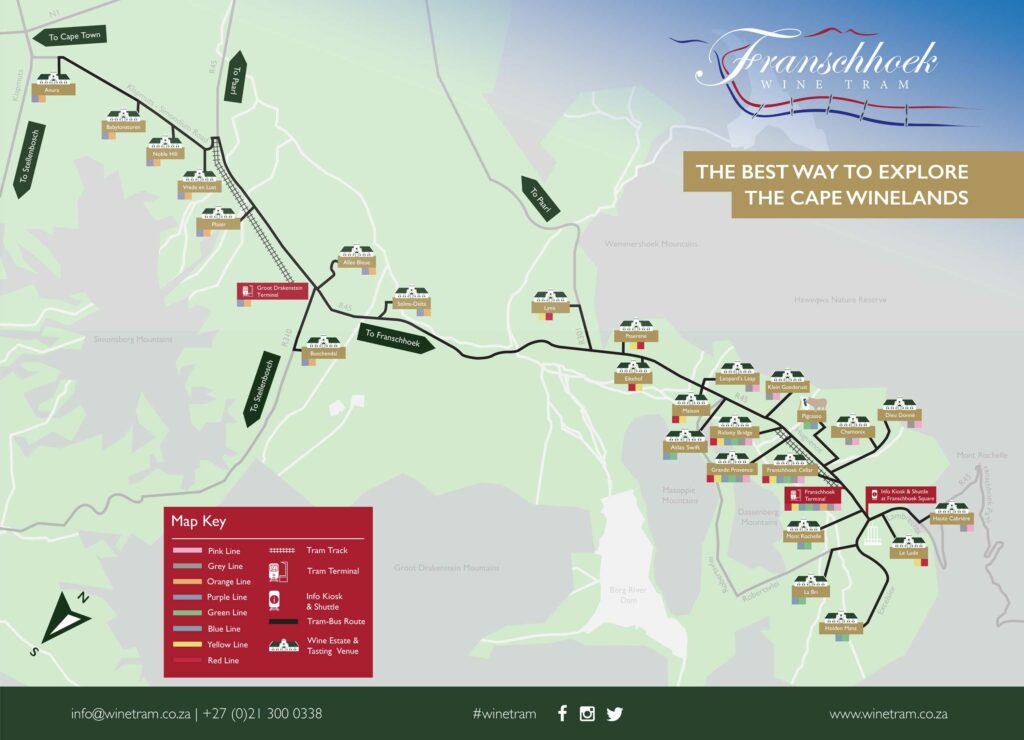
Franschhoek is the Cape Winelands distilled into one dramatic valley: vine-covered slopes, mountain passes, farm-to-table lunch spots and cellar doors within minutes of each other. It’s also very doable as a day trip from Cape Town—if you plan your transport and timing well. This guide focuses on the simplest ways to get there, exactly when to leave, and how to structure tastings whether you’re driving, hopping on a tour, using rideshares, or riding the Wine Tram.
Where Franschhoek is and how long it really takes
- Distance: roughly 75 km from central Cape Town.
- Typical driving time: 60–90 minutes, depending on traffic and your route.
- Fastest route most days: N1 to the Klapmuts (Exit 47), then R44 and R45 into Franschhoek. It’s straightforward and signposted to the village.
- Scenic alternative: via Stellenbosch and the Helshoogte Pass, adding views and a few minutes. It’s a lovely inbound route if you leave early.
Tip: Morning outbound traffic on the N1 is usually light once you’re past Century City. The biggest slowdowns are leaving Cape Town between 7:30–9:00 and the final 10 km into the valley on summer Saturdays. Aim for an 8:00 departure to arrive calm and first in line for tastings.
First decision: choose your transport style
There isn’t one “best” way—there’s the best for your group, budget and appetite for planning.
1) Self-drive (with a no-alcohol driver)
- Best for: maximum flexibility and spontaneous stops.
- Pros: easiest logistics; trunk space for bottles; you can string together estates beyond the tram lines.
- Cons: the driver should not drink. Treat tastings as zero if you’re behind the wheel. Every estate offers spittoons—use them—and buy what you like to enjoy later at your accommodation.
- Parking: free and plentiful at most estates and in the village.
2) Private driver for the day
- Best for: couples or groups who want a custom route without anyone driving.
- Pros: door-to-door timing, your choice of estates, no parking worries.
- Cons: typically the priciest option for two but great value split across 3–6 travelers.
- What to expect: full-day rates often include 8–10 hours with an experienced Winelands driver; tastings and lunch are extra. Book at least a few days ahead in summer and over weekends.
3) Small-group guided tour
- Best for: travelers who want to hand off all logistics and still see both Stellenbosch and Franschhoek in one sweep.
- What it’s like: a curated route with 2–3 estates plus time in Franschhoek for lunch or a quick extra tasting, and a return to Cape Town late afternoon (around 17:30 on many itineraries). Expect a mix of cellar tours, tastings and scenic drives.
- Pros: safest, simplest; no parking or reservations to manage.
- Cons: fixed timing; less freedom to linger at a favorite estate.
4) Rideshares (within the Winelands vs to/from Cape Town)
- Within the valley: rideshares are commonly available between Franschhoek estates and into the village, which makes it easy to string together tastings without a car.
- To/from Cape Town: availability can be patchy and pricing surge-y at peak times. Treat a rideshare all the way from Cape Town as a backup plan rather than your main strategy. If you do it, book the return mid-afternoon and have a fallback (e.g., a pre-arranged shuttle).
5) Franschhoek Wine Tram as your car-free backbone
- Why it works: you park or get dropped in the village, then ride a hop-on, hop-off circuit to a handful of estates without touching a steering wheel.
- Timing: lines start mid-morning and run at set intervals. Seats are limited; prebook your line and time slot in advance, especially over weekends and holidays.
- Keep it simple: pick a single line and aim for 2–3 stops plus lunch. Save the multi-line deep dive for an overnight stay.
The best day-trip timing (and why it matters)
A clever timetable buys you calmer tasting rooms, a proper lunch and safer daylight driving.
- 07:30–08:15 Depart Cape Town
- 09:15 Coffee and leg-stretch in Franschhoek village
- 10:00 First tasting starts
- 11:30 Second tasting
- 13:00–14:30 Lunch (booked)
- 15:00 Third, lighter tasting or a bubbly/sweet wine finale
- 16:30 Stroll Main Road or grab a coffee for the drive
- 17:00–17:30 Head back, arriving Cape Town by 18:30–19:00
Why this works:
- You beat the late-morning influx and secure patio tables with mountain views.
- You lock in lunch at a civilised hour (kitchens fill up quickly on weekends).
- You’re rolling back before dusk, avoiding pass driving in the dark.
A no-stress plan WITH a car (or private driver)
Keep distances short and tastings focused. A smart approach is to cluster tastings in one area so you’re never more than 10 minutes between stops.
- Start near the village: estates perched close to town offer fast access and big views, perfect for a 10:00 start.
- Move mid-valley before lunch: book a terrace table at a farm known for a seasonal menu. Allow 90 minutes; you’ll want it.
- Finish closer to your exit route: choose a final stop on the R45 heading back toward Klapmuts so you’re pointed home afterward.
Practical tips:
- Share one tasting flight between two; you’ll sample more styles without racing.
- Ask for a half-pour or use the spittoon. Staff are used to responsible tasters.
- Hydrate between stops. Carry a 1.5L bottle per person and keep it in the car.
A car-free plan using the Wine Tram
If you want the freedom to taste without watching the clock, the tram is your friend. Here’s a template that fits a single day without rushing.
- Prebook: choose a line with two estates you’re excited about and one flexible wildcard.
- Depart Cape Town by 07:45–08:15 to check in for a late-morning departure at the Franschhoek ticket office (corner of Main Road and Cabrière Street).
- Ride and relax: aim for two tastings before lunch, take a longer pause to eat, then one gentle finale.
- Reserve lunch: a sit-down meal on the line you’ve chosen saves time and stress.
- Wrap up by 16:00–16:30 to comfortably meet connections back to Cape Town.
Insider hint: even on the tram, prebook tastings at your top-choice estate. Walk-ins are often fine, but a quick email confirms terrace seats on busy days.
What to book in advance (and what you can wing)
- Book now: lunch (non-negotiable on weekends), your first tasting of the day, and any cellar tour or pairing experience with a start time.
- Good to wing: a late-afternoon glass on a lawn, a final bubbly stop, or a coffee in the village.
- How long per stop: most tastings take 45–60 minutes; add 15 minutes for buys, photos and the loo. Build 15–20 minutes of travel/transition time between stops even if they’re close.
Safety and South African road reality
- If you drive, don’t drink. South Africa’s drink-and-drive enforcement can be strict, and the mountain passes demand a clear head.
- Daylight is your ally. Aim to traverse the passes and rural roads in good light.
- Farm entrances can be sudden. Slow down as you approach estate turnoffs and watch for cyclists.
Budgeting your day
- Tastings: expect a range from modest to premium, often refundable with bottle purchases.
- Lunch: Franschhoek spans bakeries and cafés to tasting-room restaurants and special-occasion dining. Pre-set menus are common at top-end spots.
- Transport:
- Self-drive: fuel plus the opportunity cost of a non-drinking driver.
- Private driver: a higher flat day rate that becomes good value for groups.
- Small-group tour: mid-range pricing with tastings often included.
- Rideshares: inexpensive between estates; variable and often pricey to/from Cape Town.
- Wine Tram: per-person ticket plus tastings and lunch.
Quick cluster logic to minimise driving
You don’t need a long list—just thoughtful grouping.
- Village cluster: estates just outside town for your 10:00 start, often with sweeping valley views.
- Middle valley: larger tasting rooms and relaxed lawn seating; a good pre-lunch slot.
- Simondium edge (toward the R45 exit): convenient for a final stop that positions you on the road back to Cape Town.
Pick one estate from each cluster and you’ve built a day that flows.
When to go
- Weekdays: quieter rooms, easier lunch reservations.
- Saturdays: energetic buzz; book everything.
- Sundays: slightly shorter hours at some estates; plan your last tasting for 15:30–16:00.
- Harvest (roughly Feb–April): extra cellar activity and lovely vineyard scenes; allow more time between stops.
What if the weather turns
Rain doesn’t ruin a tasting day—many estates have fireplaces, covered verandas and indoor lounges. Wind matters less inland than it does on the Cape coast. Bring a light layer; mountain weather changes quickly.
Where to stay in Cape Town for an easy Winelands day
Base yourself with quick N1 access or near major tour pickups.
- For a central, walk-everywhere base that’s ideal for early tour departures, consider our serviced Walk to the V&A Waterfront from a Charming Apartment.
- If you prefer ocean views and a fast hop onto the N1 for a self-drive day, Milnerton is perfect. Two guest favourites are Postcard Views of Table Mountain. Generator for elevator. and Amazing Ocean Views from Every Room..
Frequently asked questions
- Do I need to prebook tastings? On weekends and holidays, yes—at least your first stop and lunch. Midweek, you can often mix booked stops with walk-ins.
- Can kids come along? Many estates welcome families and offer lawns or picnics; check age policies for tasting rooms and restaurants.
- How many tastings fit in a day? Three plus lunch is the sweet spot. Four is possible if you keep pours small and transitions tight.
- What should I bring? Water, sun protection, a light jacket, and a small tote for bottles. If you’re on a tram or tour, a portable phone charger is handy.
A final, foolproof template
- Book lunch and your first tasting before you leave Cape Town.
- Leave by 8:00 and arrive by 9:30.
- Do two tastings before 13:00, then a seated lunch.
- Finish with a lighter, view-focused stop and depart by 17:00.
- If no one can drive, lock in a tram departure or a guided tour instead of hoping for an end-of-day rideshare back to the city.
Franschhoek rewards travelers who keep things simple: fewer stops, better seats and time to linger over a glass while the mountains change colour. Plan your transport first, book lunch, and the rest of the day almost plans itself.